
Start With the Building, Not a Generic Price
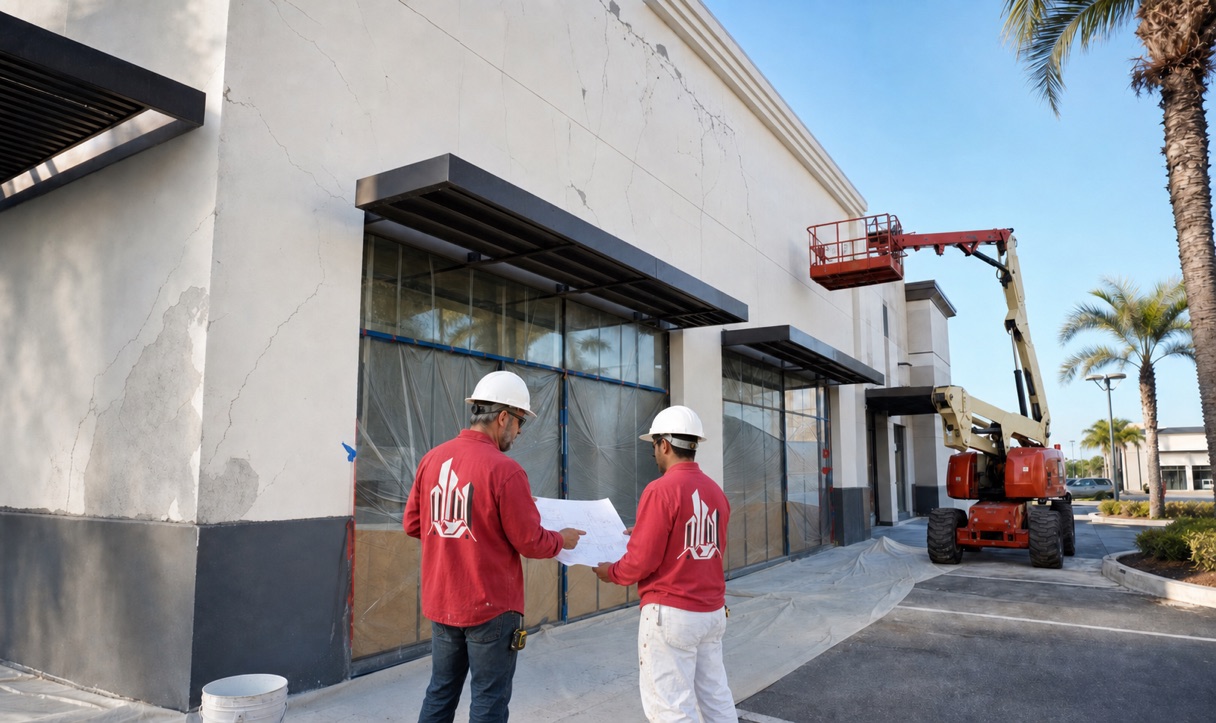
A commercial building painting budget should begin with the property’s actual surfaces, condition and operating requirements. Miami retail centers, offices, warehouses and condominium buildings can have similar square footage while demanding completely different access and preparation. A preliminary range may help capital planning, but a dependable price requires measurements, a condition review and agreement on what the finished project includes.
Property managers should separate paintable wall area from floor area and identify every secondary surface. Doors, frames, railings, soffits, parapets, exposed ceilings and metal features often require different preparation and products. A proposal that prices only broad wall surfaces may look attractive until these details appear as additions. A complete inventory creates a defensible budget and helps ownership understand where the money goes.
Condition Assessments Reveal the Real Scope
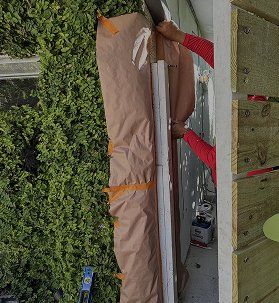
Existing condition is one of the strongest cost drivers. Sound paint may only need washing, minor patching and recoating. Peeling, chalking, rust, cracked stucco or failed sealants require more labor. Water stains should prompt investigation before painting. If moisture continues moving through the wall, a new finish can blister or discolor even when the application itself is correct.
Document the assessment with photographs and quantities. Proposals can list estimated stucco repairs, linear feet of sealant, rust-treatment areas and drywall patches. For concealed conditions, establish unit rates and written authorization rules. This approach gives managers flexibility without allowing an undefined preparation allowance to become an open-ended cost after the contractor begins removing loose material.

Height, Access and Site Logistics
A building’s shape affects labor as much as its size. Open one-story walls are efficient. Recessed elevations, narrow side yards, roof transitions and landscaping can limit lift placement. Multistory work may require boom lifts, scaffolding, swing stages or specialized access. Equipment delivery, ground protection, spotters and pedestrian control all become part of the installed price.
Site logistics also include parking, loading areas and public pathways. A retail center may need work zones moved daily so storefronts remain accessible. An office may restrict noise during meetings. A condominium may require resident notices and protect balcony access. Mapping these conditions during bidding allows the contractor to price realistic production instead of assuming uninterrupted access that the property cannot provide.
Preparation and Repair Allowances
Preparation is not one line item that should be minimized blindly. Washing removes mildew, dirt and chalk. Scraping and sanding remove unstable material. Patching restores damaged surfaces. Sealant replacement closes moving joints and transitions. Primer supports adhesion or blocks stains. Each step responds to a condition, and skipping the step transfers risk into the finish coat.
A well-structured budget distinguishes routine preparation from repairs that could not be quantified before access. Managers can fund a base scope plus a reasonable repair contingency. The contractor should still receive written approval before exceeding stated quantities. This is more transparent than an unrealistically low base bid followed by repeated changes for conditions that were visible during the walkthrough.
Coating Systems and Lifecycle Value
Product selection changes both material cost and future maintenance. Miami exteriors need coatings suited to UV exposure, humidity, rain and the substrate’s vapor behavior. Interior products should match cleaning frequency, traffic and odor restrictions. High-contact corridors may need greater scrub resistance than private offices. Metal elements may require rust-inhibitive primer rather than the masonry products used beside them.
Evaluate the coating as a system: cleaning, repair, primer and finish at the specified coverage. A lower first cost can be poor value if color fades early or adhesion fails because the system was incompatible. Ask for product data and expected maintenance, but avoid promises of a universal lifespan. Performance depends on exposure, drainage, movement, leaks and the quality of preparation.
Working Around Building Operations
Operating restrictions can change production significantly. Night work, weekend work and small phases reduce disruption but increase repeated setup and supervision. Sensitive properties may require low-odor materials, isolated work zones or daily removal of equipment. Exterior work may need to preserve customer entrances, loading routes and accessible parking throughout the project.
The budget should state the assumed work hours and owner responsibilities. If furniture must move or vehicles must clear a zone, define who coordinates it. If security escorts are required, identify the available hours. These details prevent schedule disputes and help managers communicate with tenants before work begins. Operational planning is a project cost, but it protects revenue and relationships.
Comparing Bids and Managing Changes
Normalize bids before comparing totals. Create a checklist for measured surfaces, repairs, protection, access equipment, primer, finish coats, products, schedule, cleanup and warranty. Clarify exclusions and alternate prices. A proposal that includes lifts and sealant cannot be compared directly with one that assumes the owner will provide access and excludes joints.
Changes should follow a documented process. The contractor describes the condition, provides pricing or applies an agreed unit rate, and waits for approval unless urgent protection is required. Progress photographs support remote ownership review. Regular status updates should cover completed areas, upcoming access needs and decisions that could affect cost. Good administration keeps a manageable surprise from becoming a conflict.
Turning the Estimate Into a Capital Plan
Managers can divide a large project into priorities when full funding is not available. Address active coating failure, exposed substrate, corrosion and moisture-related repairs first. Customer-facing color updates or lower-exposure areas may become alternates. Phasing by elevation or building can spread spending, although repeated mobilization should be included when comparing a phased plan with one continuous project.
Lumens Painting helps property teams develop detailed scopes for commercial building painting, including specialized office painting and warehouse and industrial work. Bring maintenance records, access limitations and the desired schedule to the walkthrough. The resulting estimate will be more useful to owners, reserve planners and tenants than a generic cost range detached from the building.
Budget Items That Are Commonly Missed
Allow for color samples, owner reviews, minor sign removal, landscape trimming and access coordination when those tasks are not already assigned. Exterior work may need temporary parking changes, protected pedestrian routes or water access for washing. Interior work can require furniture moves, after-hours security and extra time for rooms with detailed trim. None is individually dramatic, but together they can change a schedule and an otherwise accurate estimate.
Also consider work that painting reveals but does not solve. Active roof leaks, structural cracks, damaged concrete and failed windows may require separate trades. A painting contingency should not be used to hide those repairs. Identify responsibility, sequence the work and update the coating scope after the substrate is restored. Painting too early can force completed areas to be reopened by the next contractor.
Finally, reserve funds for routine inspections and touchups after the major project. Loading zones, corners, doors and high-contact corridors wear faster than broad wall fields. A small annual maintenance allowance can protect the larger investment and delay the need for full repainting. Lifecycle budgeting produces a more realistic ownership cost than treating paint as an isolated expense every several years.
Continue Planning Your Project
Before finalizing a budget, compare the scope and preparation assumptions in How Much Does Commercial Painting Cost per Square Foot in Miami? and Best Paint and Coatings for Commercial Buildings in South Florida. Apply the guidance to your own property; location-specific approvals and site conditions still need individual review.