
Why a Square-Foot Price Is Only a Starting Point
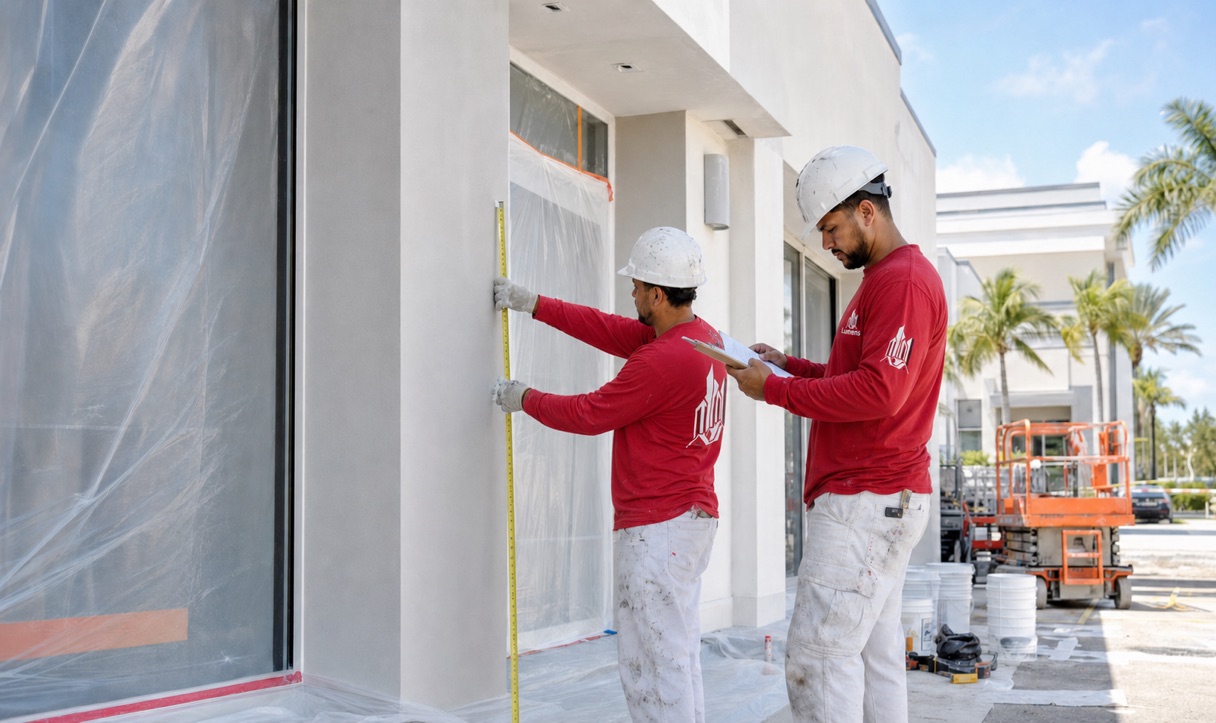
Commercial painting is often discussed as a price per square foot because area gives owners an easy way to compare projects. The number is useful for early budgeting, but it is not a complete estimate. Two Miami buildings with the same wall area can require very different labor, access equipment, repairs, protection and coating systems. A responsible proposal begins with measured quantities and then accounts for the conditions that determine how the work must be performed.
The measured area also needs a clear definition. Floor area, rentable area and paintable wall area are not interchangeable. Exterior estimates may separate stucco walls, soffits, parapets, doors, railings and metal details. Interior estimates may include walls but price ceilings, doors, frames, exposed structure and specialty surfaces separately. Ask which area the contractor used so a low-looking unit price does not hide missing scope or an unrealistic quantity.

Typical Cost Variables for Miami Commercial Painting
In Miami-Dade, preparation commonly has more influence on price than the finish coat itself. Strong UV exposure can leave existing paint faded or chalky. Humidity and frequent rain encourage mildew and expose failed sealant joints. Stucco may have hairline cracking, patch repairs or areas where previous coatings have lost adhesion. Washing, scraping, sanding, patching, caulking and priming take time, yet these steps are what allow the new system to bond and perform.
Access is another major variable. A one-story storefront with open parking is different from a multistory facade above landscaping, sidewalks or tenant entrances. Lifts, scaffolding, traffic control and spotters add cost because they add equipment and planning. The price can also change when work must happen at night, on weekends or in small phases. Those schedules may protect business operations, but repeated setup and breakdown increase labor compared with one continuous work zone.
How Surface Condition Changes the Estimate
A sound, previously painted surface usually needs cleaning, minor repairs and compatible recoating. A failing surface may need extensive removal, bonding primer or a redesigned coating system. During an assessment, the contractor should look for peeling, chalking, efflorescence, rust, moisture staining, open cracks and failed sealants. These symptoms have different causes. Painting over them without resolving the underlying condition may produce an attractive finish that fails far earlier than expected.
Repairs should be described rather than hidden inside a general preparation allowance. The proposal can identify linear feet of sealant, estimated stucco patch areas, rust treatment, drywall repairs or water-damaged sections. Unknown conditions can be handled with unit prices and a written approval process. This makes the commercial painting cost easier to control and gives the property manager a documented way to respond if concealed damage appears after loose material is removed.
Interior and Exterior Pricing Are Built Differently
Exterior commercial painting is driven by weather exposure, height, access, washing and building-envelope repairs. Interior painting is shaped by occupancy, protection, furniture movement, ceiling height, wall condition, odor requirements and the number of doors or detailed surfaces. An open warehouse wall can be efficient to coat even when it is tall. A smaller office with many rooms, glass partitions, baseboards and occupied workstations may require more labor per square foot.
For interior work, clarify whether the scope includes patching from removed fixtures, accent colors, specialty coatings, trim, doors and daily reset of work areas. For exterior work, clarify pressure washing, crack repair, sealant replacement, primer, number of finish coats and protection of windows, cars and landscaping. Comparing proposals by total square feet without aligning these details can make two genuinely different projects appear to be competing on the same price.
Paint, Primer and Coating Selection
Material cost depends on more than the name on the container. The substrate, existing coating, exposure and cleaning needs determine whether the project calls for masonry primer, bonding primer, rust-inhibitive primer, exterior acrylic, elastomeric coating, washable interior paint or a more specialized system. Coverage rates vary by porosity and texture. Rough stucco or concrete block consumes more material than a smooth sealed wall, and dramatic color changes may need an additional coat.
A lower-cost coating is not automatically economical if it fades quickly, cannot tolerate routine cleaning or lacks compatibility with the existing surface. The better comparison is installed lifecycle value: preparation plus the right system for the expected service environment. Product data, specified spread rates and the planned number of coats should appear in the estimate. This protects both parties from a vague promise to apply “premium paint” without a measurable application standard.
Scheduling, Occupancy and Protection
Commercial properties rarely stop operating for paint. Retail customers, office staff, residents, deliveries and vehicles continue moving around the site. A contractor may need to create small work zones, maintain accessible entrances and coordinate noise or odor around business hours. That planning is part of the price because it affects production. A project completed in ten uninterrupted days may require more labor when divided into twenty short shifts with daily cleanup.
Protection should be visible in the scope. It may include masking windows, covering floors and furnishings, protecting signs, moving equipment, screening spray areas and controlling overspray near parked vehicles. Clean daily closeout is especially important for restaurants, medical offices, lobbies and shared residential areas. These are not optional extras; they are part of completing the work without transferring risk and cleanup costs to the building owner.
How to Compare Commercial Painting Proposals
Start by aligning quantities and scope. Each proposal should identify surfaces, preparation, repairs, primer, finish products, coat count, access method, protection, schedule and exclusions. Confirm whether tax, permits, lift rental, disposal and off-hours work are included. Review warranty language carefully. A meaningful workmanship warranty explains what is covered and what conditions, such as active leaks, structural movement or substrate failure, remain outside a painter’s control.
Then review how the contractor plans to communicate. A useful commercial proposal names the responsible contact, change-order process, color approval method and inspection milestones. Progress photos and punch-list procedures make larger projects easier to manage. The lowest total can become expensive if missing scope is discovered after mobilization. A complete proposal may cost more initially while delivering better budget certainty and a finish that lasts longer.
Building a Reliable Miami Painting Budget
For early planning, collect building plans if available, recent repair records, photos, operating restrictions and the desired completion window. Identify known leaks or recurring cracks before requesting paint pricing. Schedule a site visit so the contractor can measure actual paintable surfaces and evaluate access. If the project is not funded yet, ask for alternates that separate essential preparation from optional color changes or lower-priority areas.
Lumens Painting prepares commercial scopes around actual Miami-Dade conditions rather than a single generic square-foot rate. Our commercial painting team can review interiors, facades and occupied properties, while commercial exterior painting planning addresses access, weather and coating exposure. A detailed walkthrough gives you a more useful budget, clearer options and fewer surprises than a price based only on floor area.
Continue Planning Your Project
Before finalizing a budget, compare the scope and preparation assumptions in Commercial Building Painting Costs: A Miami Property Manager’s Guide and Warehouse Painting in Miami: Floors, Walls, Safety and Downtime. Apply the guidance to your own property; location-specific approvals and site conditions still need individual review.