
Start Exterior Paint Preparation Before Daily Summer Rain
The best time to prepare exterior paint for hurricane season in Miami is before the pattern of daily summer rain becomes established. An early inspection gives repairs, primer and finish coats enough dry weather to cure. It also creates time to investigate stains or recurring cracks instead of treating them as ordinary paint defects.
Paint is one part of a weather resistant exterior. A sound coating helps shed normal rain and protects stucco, masonry and trim from sunlight and moisture. It cannot make a building hurricane proof, strengthen a wall or correct missing flashing. The goal is to close manageable surface defects and restore a continuous coating before severe weather arrives.
For Miami properties, this step should be documented with dated photos and clear notes about the surface, location and observed condition. Documentation helps an owner compare changes after heavy rain and gives contractors better information when preparing a scope. It also discourages rushed cosmetic work that may cover a moisture symptom without correcting its source.
Product selection comes after diagnosis. A coating, primer or sealant must be compatible with the existing surface and must be installed within the manufacturer requirements for preparation, coverage, temperature, moisture and cure time. When the cause involves roofing, structure, windows, electrical systems or code compliance, the appropriate licensed professional should evaluate that part before painting proceeds.
- Schedule inspection during a stable dry forecast
- Review previous leak and repair locations
- Allow time for cleaning, repairs, primer and curing
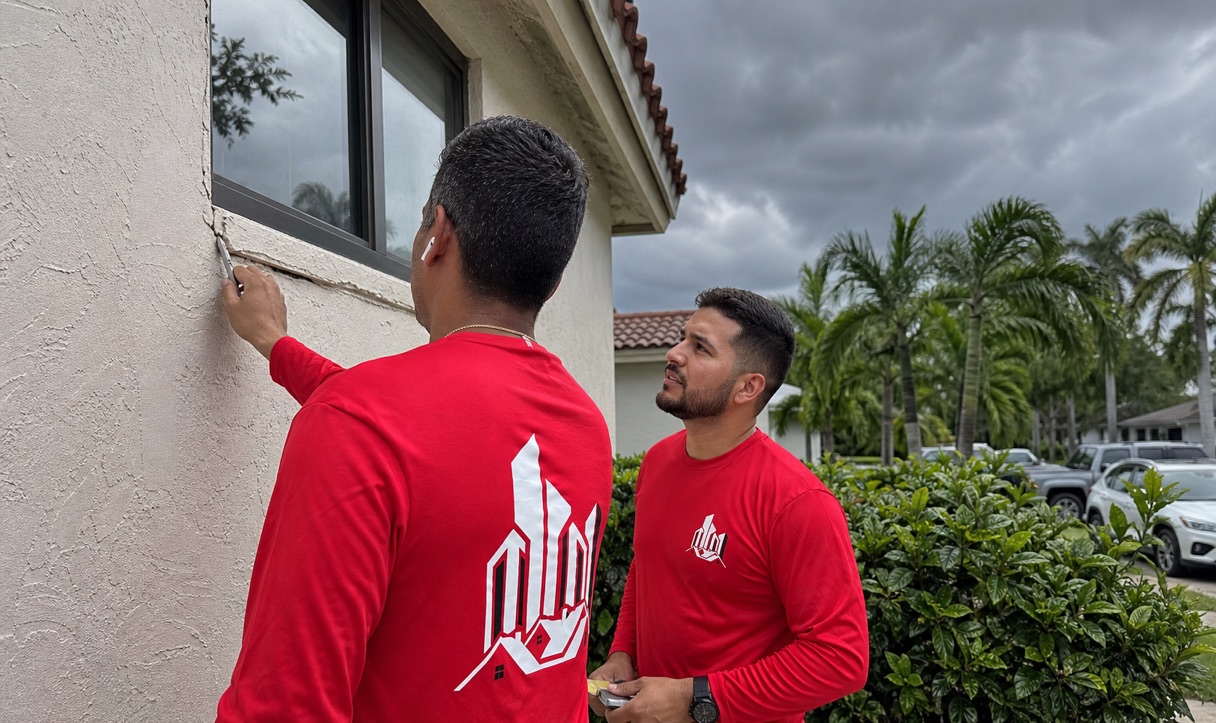
Inspect Paint, Stucco and Every Exterior Transition
Walk the property slowly and inspect from several angles. Look for chalking, peeling, bubbles, open cracks, rust stains, soft wood, failed sealant and gaps where different materials meet. Window corners, door frames, utility penetrations, parapets and horizontal ledges deserve particular attention because wind driven rain can concentrate at these transitions.
A painter should distinguish between coating wear and a deeper defect. Repeated diagonal cracks, movement, roof damage and active water entry may require another trade. Mark each concern on a simple elevation sketch so the final scope identifies the exact wall and repair rather than relying on a general instruction to patch cracks.
For Miami properties, this step should be documented with dated photos and clear notes about the surface, location and observed condition. Documentation helps an owner compare changes after heavy rain and gives contractors better information when preparing a scope. It also discourages rushed cosmetic work that may cover a moisture symptom without correcting its source.
Product selection comes after diagnosis. A coating, primer or sealant must be compatible with the existing surface and must be installed within the manufacturer requirements for preparation, coverage, temperature, moisture and cure time. When the cause involves roofing, structure, windows, electrical systems or code compliance, the appropriate licensed professional should evaluate that part before painting proceeds.
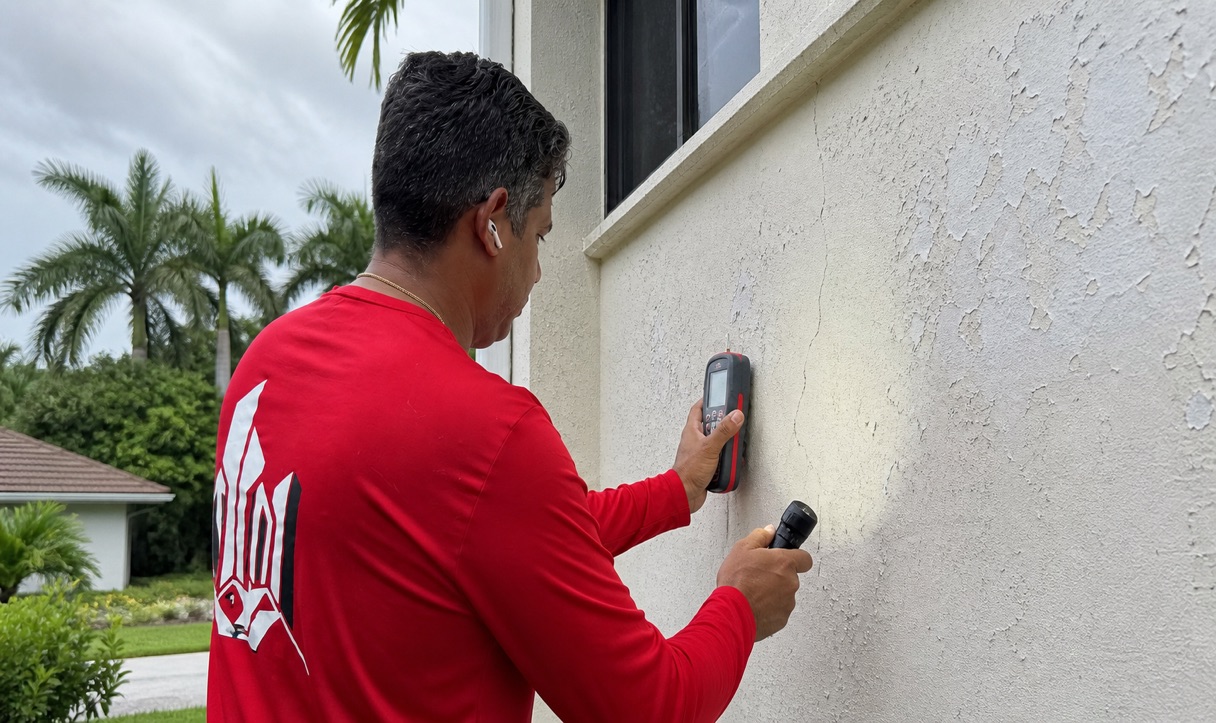
Test for Moisture Before Covering Stains or Blisters
Blistered paint and dark staining can indicate moisture behind the coating. Painting over a damp wall may trap water, weaken adhesion and cause the new finish to fail. Moisture readings, recent rain history and inspection of the opposite side of the wall can help determine whether the condition is active.
If readings remain elevated, pause the painting plan and find the source. Possible causes include roof or flashing defects, failed window joints, plumbing, irrigation and poor drainage. The wall should dry to an acceptable level after the source is corrected. Only then should loose coating be removed and the surface prepared.
For Miami properties, this step should be documented with dated photos and clear notes about the surface, location and observed condition. Documentation helps an owner compare changes after heavy rain and gives contractors better information when preparing a scope. It also discourages rushed cosmetic work that may cover a moisture symptom without correcting its source.
Product selection comes after diagnosis. A coating, primer or sealant must be compatible with the existing surface and must be installed within the manufacturer requirements for preparation, coverage, temperature, moisture and cure time. When the cause involves roofing, structure, windows, electrical systems or code compliance, the appropriate licensed professional should evaluate that part before painting proceeds.
Clean Miami Exterior Surfaces Without Damaging Them
Salt, mildew, dirt and chalk interfere with adhesion. Cleaning should remove contaminants while preserving sound stucco and sealant. Pressure that is too aggressive can cut the surface or drive water into cracks. The method should match the substrate, and cleaning solutions should be rinsed according to their instructions.
After washing, allow adequate drying time. Shaded walls, porous stucco and areas near landscaping may stay damp longer than expected. A clean surface is not automatically ready for paint. The crew should reinspect after drying because washing can reveal cracks, weak patches and loose coating that were hidden by dirt.
For Miami properties, this step should be documented with dated photos and clear notes about the surface, location and observed condition. Documentation helps an owner compare changes after heavy rain and gives contractors better information when preparing a scope. It also discourages rushed cosmetic work that may cover a moisture symptom without correcting its source.
Product selection comes after diagnosis. A coating, primer or sealant must be compatible with the existing surface and must be installed within the manufacturer requirements for preparation, coverage, temperature, moisture and cure time. When the cause involves roofing, structure, windows, electrical systems or code compliance, the appropriate licensed professional should evaluate that part before painting proceeds.
Repair Cracks and Failed Sealant With the Right Materials
Small stable cracks and failed joints often need repair before primer. The repair material must suit the crack size, expected movement and adjacent surfaces. A rigid patch in a moving joint may reopen, while a flexible sealant used as a broad wall patch can create an unattractive and incompatible surface.
Remove loose material, prepare the edges and follow required joint dimensions. Around windows and doors, do not block designed drainage openings. Large, recurring or displaced cracks deserve professional evaluation because coatings are not structural repairs. Correct diagnosis protects both the building and the new finish.
For Miami properties, this step should be documented with dated photos and clear notes about the surface, location and observed condition. Documentation helps an owner compare changes after heavy rain and gives contractors better information when preparing a scope. It also discourages rushed cosmetic work that may cover a moisture symptom without correcting its source.
Product selection comes after diagnosis. A coating, primer or sealant must be compatible with the existing surface and must be installed within the manufacturer requirements for preparation, coverage, temperature, moisture and cure time. When the cause involves roofing, structure, windows, electrical systems or code compliance, the appropriate licensed professional should evaluate that part before painting proceeds.
Choose Primer and Exterior Coating for the Existing Wall
Primer selection depends on what remains after preparation. Bare masonry, repaired stucco, rust, stains and weathered paint can require different primers. A uniform coat of primer is not always necessary, but every exposed or repaired area must receive the system specified for that condition.
Quality acrylic masonry finishes are common in South Florida. Elastomeric coatings may help bridge very small surface cracks on suitable walls, but they are not correct for every assembly. Existing coatings, vapor movement, texture and manufacturer requirements should guide the choice. A sample area can confirm appearance and adhesion.
For Miami properties, this step should be documented with dated photos and clear notes about the surface, location and observed condition. Documentation helps an owner compare changes after heavy rain and gives contractors better information when preparing a scope. It also discourages rushed cosmetic work that may cover a moisture symptom without correcting its source.
Product selection comes after diagnosis. A coating, primer or sealant must be compatible with the existing surface and must be installed within the manufacturer requirements for preparation, coverage, temperature, moisture and cure time. When the cause involves roofing, structure, windows, electrical systems or code compliance, the appropriate licensed professional should evaluate that part before painting proceeds.
Plan Application Around Weather and Cure Time
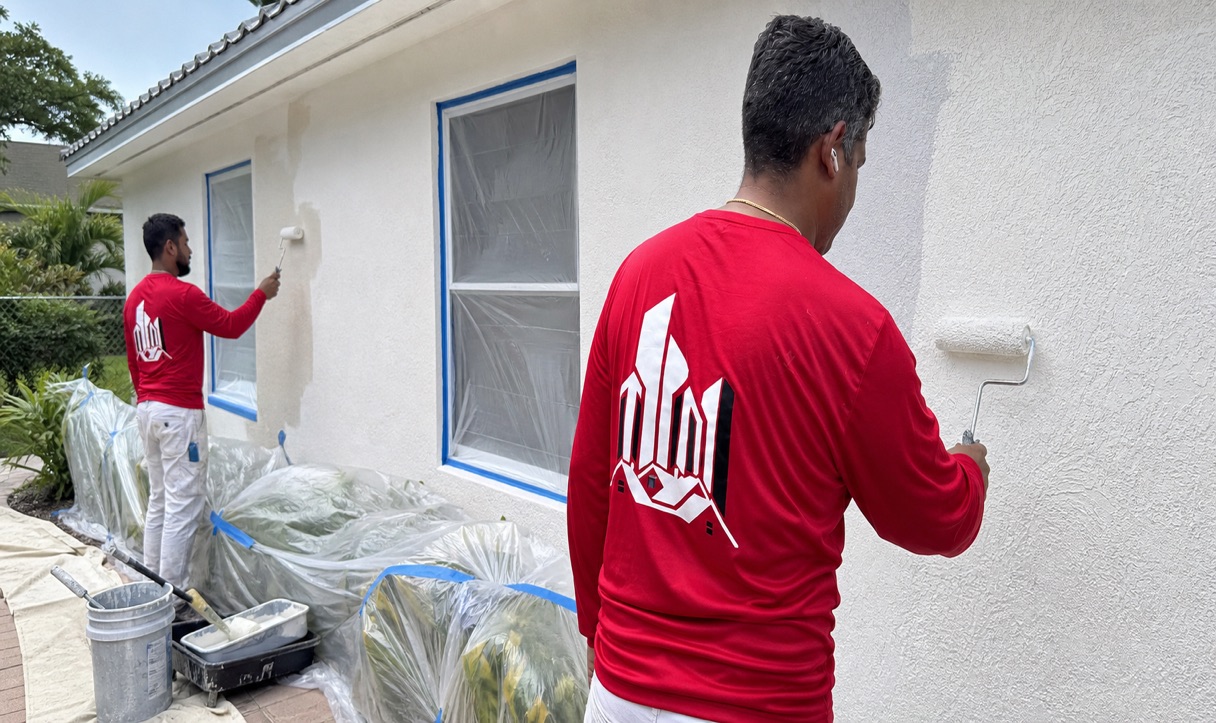
A clear morning does not guarantee a suitable painting day. Crews should review rain probability, humidity, surface temperature, dew and the product cure window. Exterior walls can remain wet after overnight rain even when the air feels dry. Afternoon showers may arrive before a fresh coating is ready.
Work should be sequenced so each elevation receives full preparation and protection. Do not rush application because a named storm is approaching. If the forecast no longer provides the required cure period, secure the site and postpone coating. A partially cured film may wash, streak or lose adhesion.
For Miami properties, this step should be documented with dated photos and clear notes about the surface, location and observed condition. Documentation helps an owner compare changes after heavy rain and gives contractors better information when preparing a scope. It also discourages rushed cosmetic work that may cover a moisture symptom without correcting its source.
Product selection comes after diagnosis. A coating, primer or sealant must be compatible with the existing surface and must be installed within the manufacturer requirements for preparation, coverage, temperature, moisture and cure time. When the cause involves roofing, structure, windows, electrical systems or code compliance, the appropriate licensed professional should evaluate that part before painting proceeds.
Complete a Final Exterior Check Before the Storm
The final review should confirm continuous coverage, sealed approved joints, clear drains and clean transitions. Check that shutters and removable storm panels can still be installed and that paint has not blocked fasteners or tracks. Remove loose job materials that could become windborne debris.
Keep product names, colors, batch information and warranty documents. Photograph each elevation after completion. These records establish the pre storm condition and simplify future maintenance. For professional help, Lumens Painting provides exterior painting for Miami homes and commercial properties.
For Miami properties, this step should be documented with dated photos and clear notes about the surface, location and observed condition. Documentation helps an owner compare changes after heavy rain and gives contractors better information when preparing a scope. It also discourages rushed cosmetic work that may cover a moisture symptom without correcting its source.
Product selection comes after diagnosis. A coating, primer or sealant must be compatible with the existing surface and must be installed within the manufacturer requirements for preparation, coverage, temperature, moisture and cure time. When the cause involves roofing, structure, windows, electrical systems or code compliance, the appropriate licensed professional should evaluate that part before painting proceeds.
Continue Planning Your Project
For the next stage of seasonal property planning, review How to Waterproof Your Miami Home Before Hurricane Season and Post Hurricane Property Inspection for Painting and Waterproofing. Apply the guidance to your own property; location-specific approvals and site conditions still need individual review.
Common Questions
Frequently Asked Questions
When should I inspect exterior paint before hurricane season?
Schedule an inspection during the dry spring months so cracks, failed sealant and coating defects can be corrected before frequent summer rain. The correct approach depends on the moisture source, substrate condition, drainage, joints, and previous coatings. An inspection helps determine whether cleaning, repairs, sealing, or a compatible waterproofing system is appropriate for the property.
Can exterior paint waterproof a Miami home?
Exterior coatings can help shed rain, but they do not replace correct flashing, drainage, sealants or repairs to the building envelope. The correct approach depends on the moisture source, substrate condition, drainage, joints, and previous coatings. An inspection helps determine whether cleaning, repairs, sealing, or a compatible waterproofing system is appropriate for the property.
Can painters work during rainy weather?
Painting should only proceed when the surface is dry and the product has enough suitable weather time to cure according to its instructions. The correct approach depends on the moisture source, substrate condition, drainage, joints, and previous coatings. An inspection helps determine whether cleaning, repairs, sealing, or a compatible waterproofing system is appropriate for the property.
What paint is best for Miami stucco?
The best system depends on stucco condition, previous coatings and exposure. Quality masonry primers and breathable acrylic or elastomeric finishes are common options. Preparation is adjusted to the substrate and may include cleaning, masking, repairs, sanding, moisture checks, and compatible primer.
Does new paint make a house hurricane proof?
No. Paint protects surfaces from normal weather exposure, but it does not provide structural hurricane protection or replace shutters, roofing work or code compliant upgrades. The correct approach depends on the moisture source, substrate condition, drainage, joints, and previous coatings.