
Inspect the Roof Before Choosing a Coating
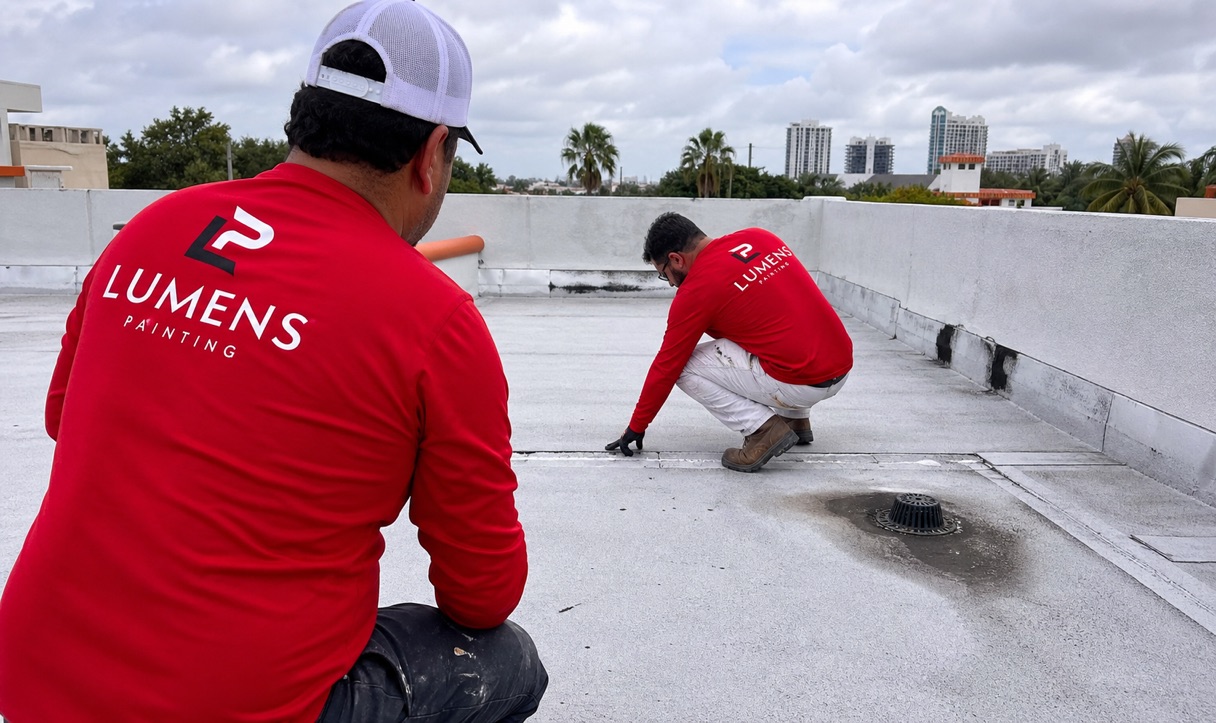
Roof coating before hurricane season in South Florida begins with inspection, not application. A qualified team should identify the roof type, age, existing system, repair history and warranty requirements. Coating a failing or incompatible roof can hide defects without creating reliable protection.
The inspection should include seams, penetrations, flashing, parapets, drains, scuppers and previous patches. Interior leak locations and recent rain patterns add useful evidence. Structural concerns and roofing defects belong with an appropriately licensed roofing contractor or engineer.
For Miami properties, this step should be documented with dated photos and clear notes about the surface, location and observed condition. Documentation helps an owner compare changes after heavy rain and gives contractors better information when preparing a scope. It also discourages rushed cosmetic work that may cover a moisture symptom without correcting its source.
Product selection comes after diagnosis. A coating, primer or sealant must be compatible with the existing surface and must be installed within the manufacturer requirements for preparation, coverage, temperature, moisture and cure time. When the cause involves roofing, structure, windows, electrical systems or code compliance, the appropriate licensed professional should evaluate that part before painting proceeds.
- Confirm roof type and warranty conditions
- Map leaks, repairs and ponding areas
- Review every seam, drain and penetration
Understand What Roof Coating Can and Cannot Do
A compatible roof coating can renew a weathered surface, improve reflectivity and create a continuous protective film. It may become part of a maintenance plan for a suitable low slope roof. Its performance depends on preparation, repairs, thickness and complete curing.
Coating is not a structural hurricane upgrade. It does not improve deck attachment, replace damaged roofing or correct unsafe drainage. Owners should treat claims that one liquid product solves every roof problem with caution. The system must be selected for the actual assembly.
For Miami properties, this step should be documented with dated photos and clear notes about the surface, location and observed condition. Documentation helps an owner compare changes after heavy rain and gives contractors better information when preparing a scope. It also discourages rushed cosmetic work that may cover a moisture symptom without correcting its source.
Product selection comes after diagnosis. A coating, primer or sealant must be compatible with the existing surface and must be installed within the manufacturer requirements for preparation, coverage, temperature, moisture and cure time. When the cause involves roofing, structure, windows, electrical systems or code compliance, the appropriate licensed professional should evaluate that part before painting proceeds.
Check for Trapped Moisture and Poor Adhesion
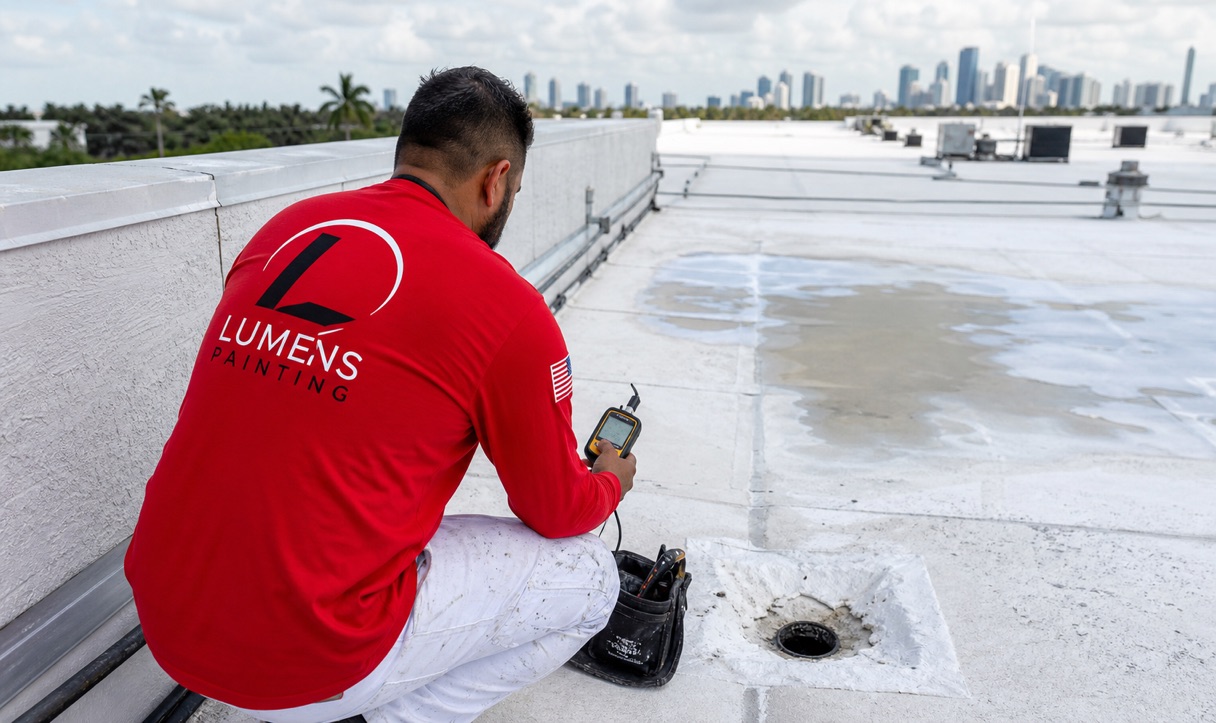
Moisture below the roof surface can undermine a new coating. Visual signs include blisters, soft areas, stains and recurring leaks, but testing may be needed to define the affected area. Saturated materials generally require a repair plan rather than being sealed under a new film.
Existing coatings also need adhesion evaluation. Cleaning alone will not stabilize loose or incompatible layers. Small test areas can help confirm preparation and compatibility. The written scope should explain how unsound material, wet sections and old patches will be handled.
For Miami properties, this step should be documented with dated photos and clear notes about the surface, location and observed condition. Documentation helps an owner compare changes after heavy rain and gives contractors better information when preparing a scope. It also discourages rushed cosmetic work that may cover a moisture symptom without correcting its source.
Product selection comes after diagnosis. A coating, primer or sealant must be compatible with the existing surface and must be installed within the manufacturer requirements for preparation, coverage, temperature, moisture and cure time. When the cause involves roofing, structure, windows, electrical systems or code compliance, the appropriate licensed professional should evaluate that part before painting proceeds.
Correct Drainage, Flashing and Penetration Defects
South Florida downpours place heavy demand on drains and scuppers. Debris, poor slope and low areas can leave standing water. Ponding may shorten service life and expose seams for longer periods. Clear drainage and correct defects before coating.
Penetrations and flashing usually require detail work with materials made for the selected system. Air conditioning supports, pipes and equipment curbs should be reviewed without coating movable or serviceable components. A continuous field coat cannot compensate for an untreated transition.
For Miami properties, this step should be documented with dated photos and clear notes about the surface, location and observed condition. Documentation helps an owner compare changes after heavy rain and gives contractors better information when preparing a scope. It also discourages rushed cosmetic work that may cover a moisture symptom without correcting its source.
Product selection comes after diagnosis. A coating, primer or sealant must be compatible with the existing surface and must be installed within the manufacturer requirements for preparation, coverage, temperature, moisture and cure time. When the cause involves roofing, structure, windows, electrical systems or code compliance, the appropriate licensed professional should evaluate that part before painting proceeds.
Prepare the Surface and Complete Required Repairs
Preparation may include debris removal, washing, biological treatment, rust correction and removal of loose material. The roof must then dry. Repairs should use compatible products and follow the coating manufacturer detail requirements.
Protect drains, equipment and adjacent property during work. Organize access so crews do not damage completed areas. Lumens Painting can assess appropriate roof coating work within its service scope and coordinate clear boundaries when roofing repairs require another licensed trade.
For Miami properties, this step should be documented with dated photos and clear notes about the surface, location and observed condition. Documentation helps an owner compare changes after heavy rain and gives contractors better information when preparing a scope. It also discourages rushed cosmetic work that may cover a moisture symptom without correcting its source.
Product selection comes after diagnosis. A coating, primer or sealant must be compatible with the existing surface and must be installed within the manufacturer requirements for preparation, coverage, temperature, moisture and cure time. When the cause involves roofing, structure, windows, electrical systems or code compliance, the appropriate licensed professional should evaluate that part before painting proceeds.
Apply the Specified System at the Correct Coverage
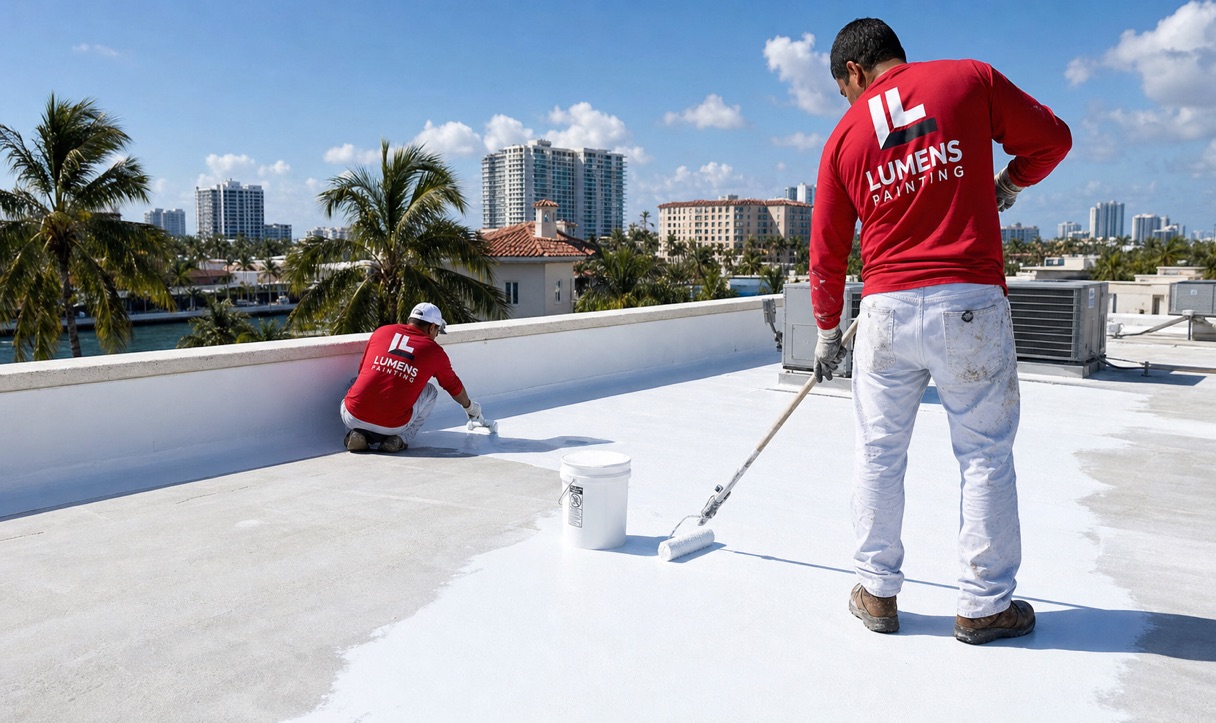
Roof coating performance depends on installed thickness, not simply a white appearance. The specification should state primer, reinforcement, detail materials, number of coats and coverage rate. Crews should track material use against measured roof area.
Direction changes between coats can improve uniformity when specified. Thin spots near edges and equipment deserve close attention. Quality control may include wet film measurements, material counts and photographs of details before the field coat covers them.
For Miami properties, this step should be documented with dated photos and clear notes about the surface, location and observed condition. Documentation helps an owner compare changes after heavy rain and gives contractors better information when preparing a scope. It also discourages rushed cosmetic work that may cover a moisture symptom without correcting its source.
Product selection comes after diagnosis. A coating, primer or sealant must be compatible with the existing surface and must be installed within the manufacturer requirements for preparation, coverage, temperature, moisture and cure time. When the cause involves roofing, structure, windows, electrical systems or code compliance, the appropriate licensed professional should evaluate that part before painting proceeds.
Plan for Miami Weather and Full Cure Time
The roof must have a suitable dry forecast for preparation, application and curing. Dew, humidity, surface temperature and afternoon rain all affect the schedule. A storm approaching within the cure window is a reason to postpone, not rush.
Secure materials and leave drains open at the end of every shift. The final inspection should occur after curing and should confirm clean drainage, continuous coverage and finished details. Save product and warranty records for future maintenance.
For Miami properties, this step should be documented with dated photos and clear notes about the surface, location and observed condition. Documentation helps an owner compare changes after heavy rain and gives contractors better information when preparing a scope. It also discourages rushed cosmetic work that may cover a moisture symptom without correcting its source.
Product selection comes after diagnosis. A coating, primer or sealant must be compatible with the existing surface and must be installed within the manufacturer requirements for preparation, coverage, temperature, moisture and cure time. When the cause involves roofing, structure, windows, electrical systems or code compliance, the appropriate licensed professional should evaluate that part before painting proceeds.
Continue Planning Your Project
For the next stage of seasonal property planning, review Commercial Roof Waterproofing vs. Roof Coating: Which Do You Need? and Post Hurricane Property Inspection for Painting and Waterproofing. Apply the guidance to your own property; location-specific approvals and site conditions still need individual review.
Common Questions
Frequently Asked Questions
Does roof coating stop every roof leak?
No. Active leaks, damaged roofing, failed flashing and drainage problems must be diagnosed and repaired before a compatible coating is considered. The correct approach depends on the moisture source, substrate condition, drainage, joints, and previous coatings.
Can roof coating be applied right before a storm?
No. The surface and forecast must meet product requirements, and the complete system needs enough dry time to cure. The correct approach depends on the moisture source, substrate condition, drainage, joints, and previous coatings.
What is checked before coating a roof?
The inspection should review moisture, adhesion, seams, penetrations, flashing, drains, ponding areas and the condition of the existing roof. The correct approach depends on the moisture source, substrate condition, drainage, joints, and previous coatings. An inspection helps determine whether cleaning, repairs, sealing, or a compatible waterproofing system is appropriate for the property.
Can a reflective coating reduce roof temperature?
A suitable reflective coating can reduce solar heat gain at the roof surface, though results vary with insulation, building design and operating conditions. Preparation is adjusted to the substrate and may include cleaning, masking, repairs, sanding, moisture checks, and compatible primer. Careful preparation improves adhesion, appearance, and coating life while protecting nearby floors, fixtures, landscaping, and occupied areas.
Is roof coating a structural hurricane upgrade?
No. A coating is a surface protection system and does not strengthen roof attachment or replace work by a licensed roofing contractor or engineer. The correct approach depends on the moisture source, substrate condition, drainage, joints, and previous coatings.