
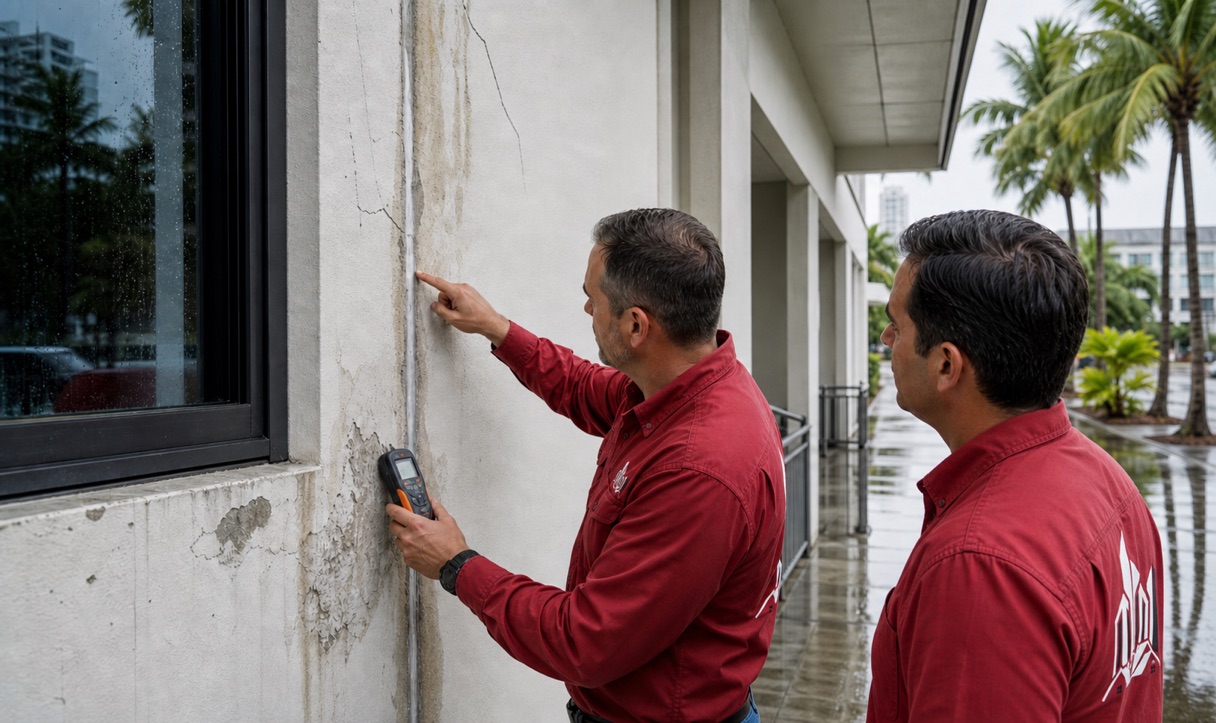
Waterproofing Problems Often Begin With Small Clues
Commercial buildings rarely announce water intrusion with one obvious opening. Early signs may be a faint stain, recurring odor, hairline crack or sealant joint pulling away from one edge. These clues are easy to repaint or clean, but recurring symptoms deserve investigation. Miami wind-driven rain can enter at one elevation and travel along framing or concrete before becoming visible indoors.
Property managers should record when and where symptoms appear. Note whether staining follows heavy rain, irrigation, air-conditioning use or a plumbing event. Photographs taken over time can reveal growth patterns. This history helps a contractor separate exterior water from condensation or interior leaks and reduces the temptation to recommend a coating without understanding the source.
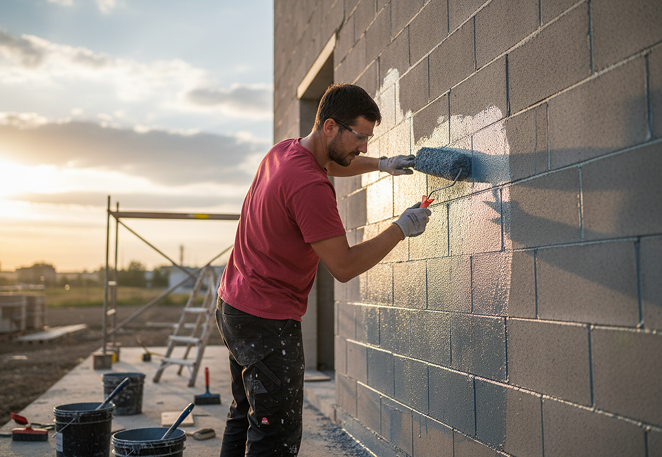
Water Stains and Recurring Interior Discoloration
Yellow, brown or gray stains on ceilings and walls show that moisture has carried contaminants through a surface. The visible location is not always the entry point. Water can travel across roof decks, down framing or through cracks. Repainting the stain before the source is corrected may temporarily hide it, but the discoloration and coating failure usually return.
Map stains by room and elevation, then compare them with roof drains, windows, parapets and exterior joints. Stain-blocking primer belongs after the moisture source has been addressed and the material has dried. Soft drywall, deteriorated insulation or suspected microbial growth may require removal or specialist evaluation rather than routine painting.
Peeling, Blistering and Bubbling Paint
Paint can peel from poor preparation, incompatible coatings or moisture pushing against the film. Blisters that appear after storms or on particular elevations can indicate water behind the coating. Exterior masonry may also show mineral deposits or dark pathways near cracks. The pattern and timing matter more than the symptom alone.
Do not simply puncture blisters and repaint. A contractor should test adhesion around the area, inspect nearby joints and evaluate whether moisture is entering from above or behind. Thick impermeable layers can trap moisture in certain wall assemblies. Removing failed coating may reveal the extent of the condition and inform a system that allows appropriate drying.
Cracks in Stucco, Concrete and Masonry
Hairline cracks are common, but they can admit wind-driven rain when they connect to porous surfaces or failed coatings. Wider cracks, displacement and repeated reopening suggest movement that may need evaluation beyond cosmetic repair. Cracks near window corners, parapets, balconies and transitions deserve attention because stress and water often concentrate there.
Track crack width and length with dated photographs. A repair should match expected movement. Rigid patch material may work for a stable defect, while moving joints need flexible treatment. Painting across a crack without preparation can make it disappear briefly while leaving the pathway open. Structural concerns should be referred to an appropriate professional.
Failed Sealants Around Windows and Joints
Sealant fails through cracking, hardening, loss of adhesion or poor original installation. Look for gaps at window perimeters, panel joints, doors, penetrations and changes in material. A joint can appear intact from the ground while separating along one edge. Water entering there may show indoors beside the opening or travel into adjacent wall areas.
Effective repair usually requires removal of failed sealant, cleaning and installation with proper joint geometry. Applying a thin smear on top does not restore movement capacity or adhesion. Compatibility with adjacent coatings and window materials matters. Building-wide sealant review can be more efficient than reacting to one leak at a time when joints are the same age.
Efflorescence, Rust and Concrete Deterioration
Efflorescence appears as white mineral deposits where water moves through masonry and evaporates. Cleaning removes the residue but not the pathway. Rust stains can indicate corroding metal or reinforcement. As embedded steel corrodes, expansion can crack and spall concrete. These conditions are more significant than a simple color problem.
A contractor should identify moisture sources and the extent of loose or unsound material. Concrete restoration may be required before waterproof coatings. Covering rust or mineral deposits can lead to renewed staining and adhesion failure. Drainage, cracks and exposed edges should be reviewed together so the repair addresses why water reaches the material.
Odors, Dampness and Mold-Like Growth
Persistent damp odors or visible growth indicate a moisture condition, but the source can be exterior water, plumbing, condensation or indoor humidity. Waterproofing is appropriate only when building-envelope water is part of the cause. HVAC operation, ventilation and temperature differences may require separate assessment. Health-related concerns should be handled by qualified professionals.
Avoid coating over damp or contaminated surfaces. Document relative timing and inspect concealed areas when appropriate. Materials may need to dry or be replaced before repainting. Exterior cleaning and waterproofing can support the solution when cracks, joints or porous walls are involved, but the plan should coordinate interior remediation rather than treating the finish as the diagnosis.
What to Do When You Notice a Warning Sign
Protect occupants and contents first, then document the condition. Check obvious drains, plumbing and recent work without making unsafe roof or facade access. Arrange an inspection that includes the exterior area above and around the symptom. Share storm timing, previous repairs and photographs. If the cause remains uncertain, staged testing is better than broad coating based on a guess.
Lumens Painting assesses coating and surface conditions for commercial waterproofing, stucco waterproofing and related repairs in Miami-Dade. Our role is to connect visible surface symptoms with a practical preparation and coating scope. Use the project assessment form to describe when the problem appears and include the building area so the walkthrough starts with useful evidence.
Create a Building Moisture Log
A simple moisture log can make inspection far more effective. Record the date, room, approximate size of the symptom, recent weather and whether the area felt damp. Include photographs from the same angle. Note nearby roof equipment, windows, plumbing and exterior repairs. A recurring pattern often reveals more than one observation made after the surface has dried.
Ask maintenance and tenant teams to report conditions through one channel. Separate old stains from active events and avoid repeated cosmetic touchups that erase evidence. If buckets, towels or temporary sealant were used, document their locations. Those responses can redirect water and change where it appears, which is important information for the person tracing the source.
The log also helps prioritize repairs. Active water near electrical systems or occupied interiors needs immediate response, while stable exterior coating defects can enter planned maintenance. Tracking creates a defensible history for ownership, insurers and contractors without assuming every moisture condition has the same urgency or cause.
When the Problem Needs Another Specialist
Waterproofing and coating contractors address surface and building-envelope details within their scope. Structural movement, extensive concrete spalling, unsafe balconies, saturated roof assemblies and major window-system failures may require engineers, roofers, restoration contractors or manufacturers. Interior mold assessment, plumbing and HVAC condensation can also fall outside exterior coating work.
A trustworthy inspection recognizes those boundaries. Referring a condition does not mean surface waterproofing is irrelevant; it means the sequence must begin with the root issue. After structural or roof repairs, coatings and sealants may complete protection. Installing them first can hide damage and force the finished work to be removed.
Owners should expect a written scope to describe limitations. The contractor can state which elevations or details are included, which symptoms the work intends to address and which conditions were not accessible. Specific language supports better decisions than a blanket guarantee against all future water. Buildings remain dynamic, and coordinated maintenance is the durable solution.
Continue Planning Your Project
To separate coating maintenance from moisture problems, continue with Concrete Waterproofing Methods for Miami Buildings and Post Hurricane Property Inspection for Painting and Waterproofing. Apply the guidance to your own property; location-specific approvals and site conditions still need individual review.