
Commercial Painting Is a Managed Building Process
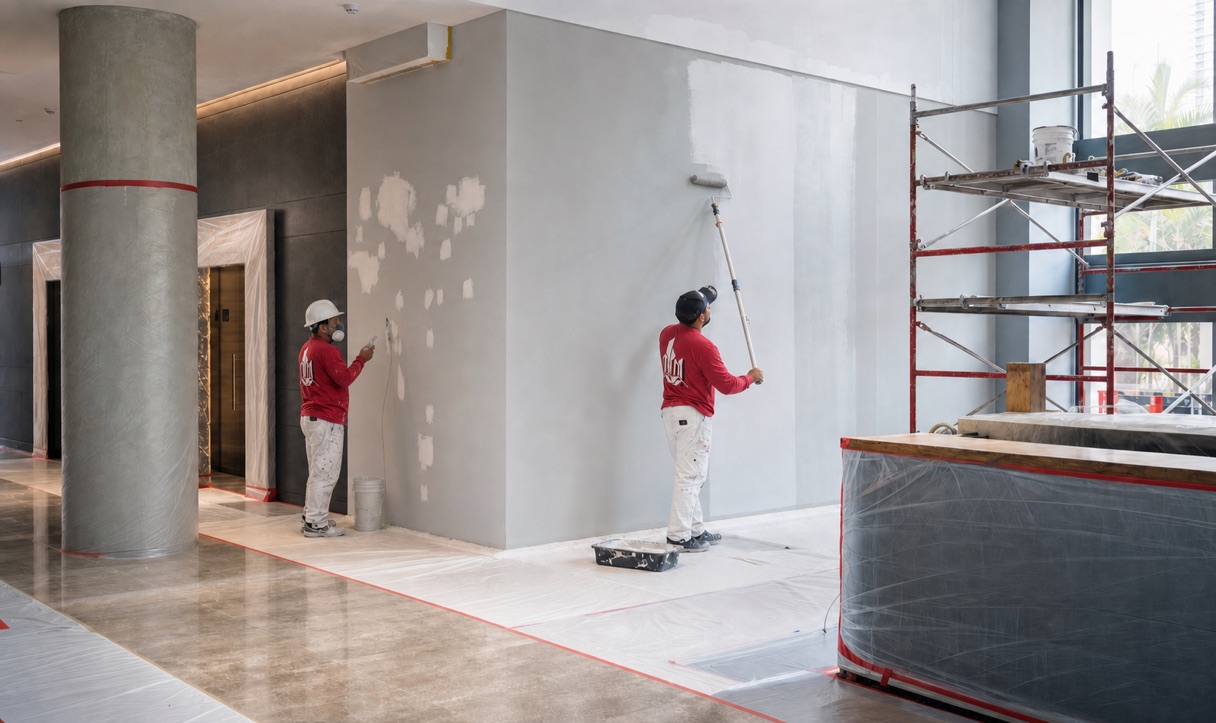
Commercial painting is the preparation and coating of buildings used by businesses, institutions, associations and other organizations. The work can include offices, retail stores, warehouses, medical spaces, restaurants, condominium common areas and exterior facades. It differs from a simple color change because the contractor must coordinate surface performance, occupants, access, safety, schedule and communication while protecting the property’s daily operation.
A successful project combines construction planning with finish work. Before paint is applied, the team identifies substrates, existing coatings, damage, moisture exposure and cleaning requirements. The project may involve drywall, stucco, concrete block, metal, wood and previously coated specialty surfaces. Each behaves differently. Commercial painting therefore depends on a written scope and compatible systems, not one product applied everywhere.
The Assessment and Scope-Definition Stage
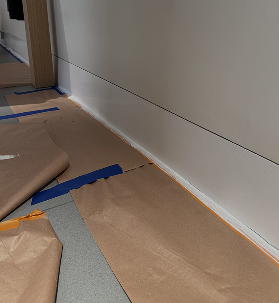
The first stage is a site assessment. The contractor reviews the building’s condition, measures paintable areas and documents access restrictions. Interior reviews look at wall damage, ceiling height, furniture, operating hours and sensitive areas. Exterior reviews look for chalking, peeling, cracks, failed sealants, mildew, rust, water staining and difficult elevations. Known leaks or structural movement should be identified before cosmetic coating work begins.
Those observations become a scope of work. A useful scope lists surfaces, repairs, cleaning, preparation, primer, finish coats, colors, protection and exclusions. It should also explain which party moves furniture, removes signs or coordinates access. Defining these items early allows the owner to compare comparable proposals and reduces the chance that essential preparation appears later as an unexpected change order.

Surface Preparation Determines Coating Performance
Paint bonds to the surface beneath it, so preparation determines whether the finish performs. Exterior preparation can include pressure washing, mildew treatment, scraping, sanding, stucco repair, sealant replacement and spot priming. Interior preparation may include cleaning, drywall patching, sanding, stain blocking and protection of floors or furnishings. Preparation should remove contamination and unstable material without damaging the substrate.
Different failures require different responses. Chalking needs to be cleaned until the surface can accept a coating. Rust must be stabilized and primed with a compatible system. Efflorescence can indicate moisture moving through masonry. Peeling near a window may point to failed sealant rather than poor paint. Treating every symptom as a paint problem ignores the building conditions that caused it and shortens the life of the new work.
Primer and Finish-Coat Selection
Commercial primers solve specific adhesion and blocking problems. Masonry primer can support porous stucco or block. Bonding primer helps on difficult existing finishes. Rust-inhibitive primers prepare properly cleaned metal. Stain-blocking primers isolate water marks or other discoloration after the source has been corrected. Primer selection should be based on the substrate and existing condition rather than used as a generic extra step.
Finish coatings are selected around exposure and maintenance. Exterior acrylic coatings need UV and weather resistance. Elastomeric systems may be appropriate for certain masonry surfaces when movement, film thickness and vapor behavior are considered. Interior offices often benefit from low-odor, washable finishes, while corridors and service areas may need greater scrub resistance. The sheen affects appearance, cleaning and how strongly surface imperfections show.
Planning Around Tenants, Customers and Staff
Commercial painting often happens in occupied buildings. The work plan may use phases, off-hours shifts or isolated zones to keep entrances, elevators and essential rooms available. The contractor needs to account for deliveries, security, noise, odor, employee routes and customer-facing spaces. In an HOA or condominium, communication may also include resident notices and limits on where equipment can be staged.
Daily cleanup is part of this planning. Floors and furnishings should remain protected, tools should be secured and pathways should reopen safely at the agreed time. A phased schedule can cost more than uninterrupted production, but it may prevent greater business disruption. The owner and contractor should decide in advance which areas must remain operational and what conditions define a completed daily handoff.
Application and Quality Control
Commercial coatings may be brushed, rolled or sprayed depending on the surface and setting. Spray application can be efficient on large open areas but requires extensive masking and overspray control. Rolling works well on many walls and textured surfaces. Brushing is used for cut lines, details and certain substrates. The method should support the specified coverage and finish rather than simply maximize speed.
Quality control begins before the final walkthrough. Supervisors should confirm approved colors, repair completion, primer use, coverage and clean transitions as work progresses. Wet-film or dry-film requirements matter for some protective coatings. Progress inspections catch missed preparation while it is still visible. At the end, the contractor and owner create a punch list, verify cleanup and document any maintenance or cure requirements.
Interior, Exterior and Specialty Commercial Work
Interior commercial painting focuses on presentation, washability and occupancy. Offices, lobbies and retail spaces need clean lines and consistent colors, while warehouses and service rooms prioritize durability and visibility. Exterior painting must respond to rain, sun, humidity and movement at joints. Miami-Dade facades also need close attention to stucco cracks, sealants and moisture pathways before coating.
Specialty work can include concrete floors, safety markings, exposed structure, metal railings, waterproof coatings and high-performance systems. These services require preparation and products beyond ordinary wall paint. They should be scoped separately with clear substrate requirements. When multiple services are needed, coordinating them under one plan can reduce repeated mobilization and ensure that washing, repairs, waterproofing and painting happen in the correct order.
What to Expect From a Professional Commercial Painter
A professional commercial painter should provide insurance information, a written proposal, clear product specifications and a realistic schedule. The contractor should be able to explain why a preparation method or coating fits the surface. Communication matters as much as application: owners need to know who manages the work, how changes are approved, how occupied areas are protected and when inspections occur.
Lumens Painting provides commercial painting in Miami-Dade with planning for active properties, weather exposure and long-term maintenance. Dedicated services for commercial interiors and commercial exteriors help owners match the work to the building environment. Begin with a walkthrough, share operational constraints and request a scope that makes preparation and quality standards easy to verify.
A Practical Pre-Project Checklist
Before requesting proposals, assemble current floor plans, finish schedules if available, photographs and records of leaks or repairs. Identify required colors, areas that can close and dates when the property is busiest. List sensitive rooms, alarm procedures, parking restrictions and the person authorized to approve changes. This information allows bidders to plan the same operating assumptions and makes their proposals easier to compare.
During the walkthrough, ask the contractor to separate visible repairs from unknown conditions, explain access equipment and identify sample locations. Confirm whether ceilings, doors, frames, railings and exposed structure are included. Discuss daily cleanup, ventilation and cure time. If tenants need notices, decide who issues them and how far in advance. Small administrative decisions made early can prevent expensive interruptions once crews and equipment are on site.
Before work begins, approve colors in the actual building light and record the selected products. Establish the first work zone, inspection points and a communication rhythm. Professional commercial painting should feel predictable because the plan accounts for people as carefully as surfaces. The visible finish is the final result of many controlled decisions made before a roller or spray tip reaches the wall.
Continue Planning Your Project
To plan the related surfaces, schedule and finish requirements, read Commercial vs. Residential Painting: Costs, Materials and Scheduling and How Much Does Commercial Painting Cost per Square Foot in Miami?. Apply the guidance to your own property; location-specific approvals and site conditions still need individual review.