
Commercial Waterproofing Protects the Building Envelope
Commercial waterproofing is the coordinated use of repairs, sealants, membranes and protective coatings to control how water enters or moves through a building. It is not one product applied to every surface. Roofs, exterior walls, joints, balconies, foundations and penetrations manage water differently. A successful plan identifies the pathway and selects details compatible with the substrate and surrounding assemblies.
In Miami-Dade, wind-driven rain, humidity, intense sun and repeated wet-dry cycles put building envelopes under constant stress. Small cracks and failed joints can admit water that appears indoors far from the opening. Waterproofing therefore begins with investigation. Covering the visible stain or applying a coating without locating the path can hide evidence while moisture continues damaging finishes.

Exterior Walls and Facades
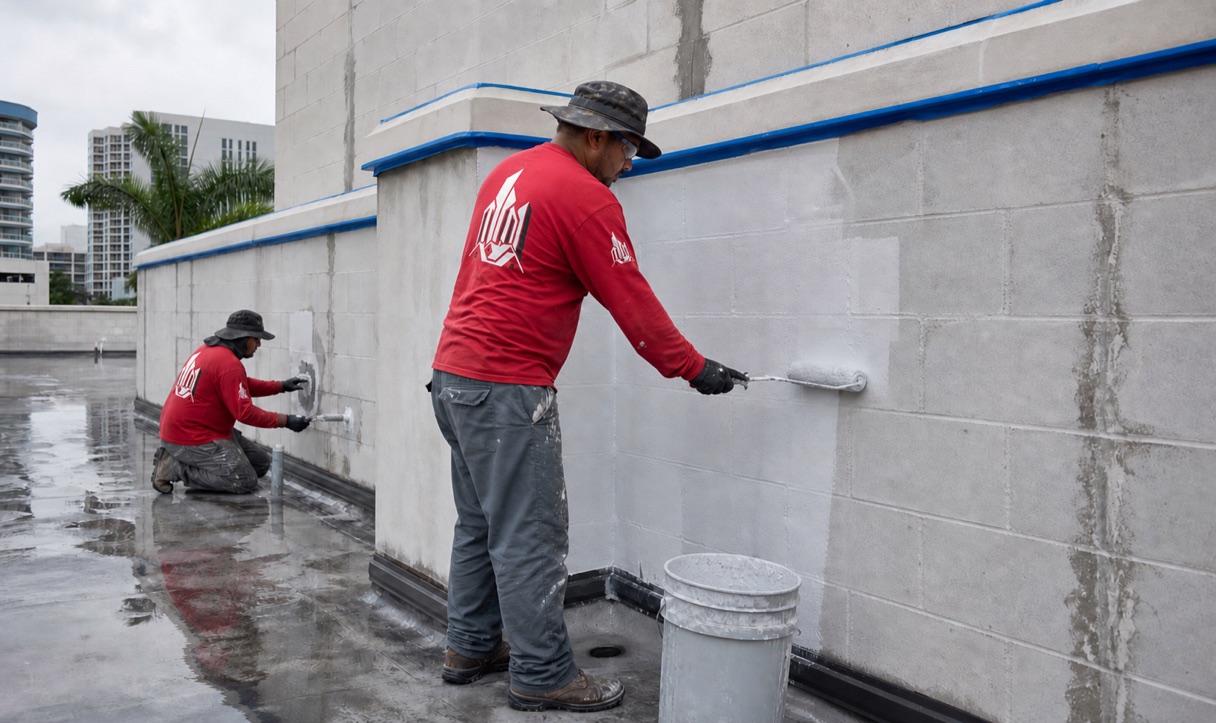
Stucco, concrete and masonry walls absorb and shed moisture through their surfaces, cracks and transitions. Waterproofing work may include cleaning, crack repair, stucco patching, sealant replacement, masonry primers and appropriate protective coatings. Windows, doors, ledges and parapets deserve close attention because water concentrates where materials and planes meet.
Wall coatings must be compatible with existing layers and vapor behavior. A thicker film is not automatically better. If moisture is moving from behind the wall, trapping it can contribute to blistering or efflorescence. The contractor should investigate recurring failures, review drainage and test adhesion before specifying a complete facade system.
Roofs, Parapets and Flashing Details
Roof waterproofing depends on the roof assembly, drainage and condition. Open seams, failed flashing, damaged penetrations and ponding water require specific repairs. Reflective coatings can extend the service of eligible roofs and improve solar reflectance, but coating should not be used as a shortcut over wet insulation or a roof that has reached the end of its serviceable life.
Parapet walls connect roof and facade systems. Cracked caps, open joints or poorly detailed transitions can allow water behind exterior coatings. Roof and wall contractors may need to coordinate so repairs do not stop at an arbitrary trade boundary. Inspection after rain and maintenance of drains help the completed system continue performing.
Joints, Sealants and Penetrations
Buildings move from temperature, wind, settlement and normal material behavior. Joints are designed to accommodate some of that movement. Sealant at windows, panels, doors and penetrations needs the correct joint shape, backing and adhesion. Smearing new sealant over failed material rarely creates a durable repair because contamination and poor geometry remain underneath.
A sealant scope should identify locations, removal requirements and compatible products. Some cracks are static and can be repaired with rigid material; others move and need flexible treatment. Structural cracks require evaluation outside routine coating work. Distinguishing these conditions prevents a cosmetic patch from being represented as a permanent waterproofing solution.
Concrete Decks, Balconies and Horizontal Surfaces
Horizontal surfaces receive standing water, foot traffic and greater wear than vertical walls. Balconies, walkways and decks need drainage, sound concrete and systems designed for traffic. Cracks, joints, edges and drains are critical details. A coating applied across the field cannot compensate for water that ponds because the slope or drain is defective.
Surface preparation may include cleaning, removal of failed coatings, crack treatment and mechanical profiling. Slip resistance and cure time should be planned around occupants. In condominium and hospitality properties, phasing must preserve safe routes. Owners should understand maintenance requirements, including cleaning and periodic review of high-wear areas.
Foundations and Below-Grade Conditions
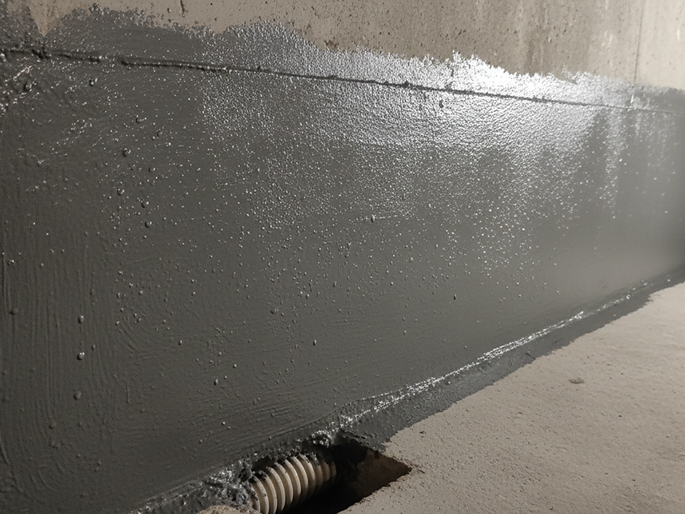
Below-grade water can be influenced by groundwater, irrigation, drainage and hydrostatic pressure. The source side of the wall is often difficult to access after construction. Interior-applied products may help certain conditions, but they should not be described as interchangeable with exterior foundation waterproofing. Drainage and structural conditions may require specialists beyond a coating contractor.
Visible symptoms include dampness, mineral deposits, peeling finishes and musty odors. Measurements and observations over time help distinguish a plumbing leak from exterior water or condensation. Commercial waterproofing recommendations should state what is known, what remains uncertain and which repairs are expected to control the identified pathway.
Inspection, Testing and Maintenance
An assessment may use visual inspection, moisture meters, controlled water testing or review of plans and previous repairs. Testing must be planned carefully so it does not introduce uncontrolled water. Photographs of cracks, joints and staining create a useful baseline. When the pathway is uncertain, staged investigation is more responsible than coating every nearby surface.
After work, maintain drains, clean surfaces and inspect sealants and coatings regularly. Storms, roof work and new penetrations can alter performance. Early maintenance of a small joint is less disruptive than broad repairs after water reaches interiors. Keep records of products and repaired locations so future teams understand the system already in place.
Choosing the Right Waterproofing Scope
A strong proposal identifies the affected assembly, preparation, repairs, products, application requirements, access and exclusions. It should not promise to “waterproof the building” when work addresses only selected walls. Ask how the recommended system responds to the suspected pathway and how the contractor will confirm preparation and coverage before closeout.
Lumens Painting provides commercial waterproofing in Miami-Dade with related concrete waterproofing and stucco waterproofing services. We focus scopes on observed conditions and compatible surface systems. Start with the location and timing of the moisture, then allow the inspection to guide the repair rather than beginning with a predetermined product.
How Owners Can Prepare for an Envelope Assessment
Collect leak logs, photographs and repair invoices before the site visit. Mark the date, weather and duration of each event. If water appears only during wind from one direction, that pattern is valuable. Identify roof work, window replacement, facade painting or new penetrations completed before the symptoms began. Building staff often hold useful observations that do not appear in formal records.
Make affected interiors accessible and provide safe access to corresponding exterior areas when possible. Do not repaint stains immediately before the inspection. Existing patterns help establish movement and timing. If finishes must be removed for investigation, agree on the limits and restoration responsibility. Some pathways can be found visually; others require controlled testing or review by a qualified envelope professional.
Ask the contractor to distinguish confirmed defects, likely pathways and assumptions. The proposal should identify which symptoms the scope intends to address and what remains outside it. Broad language promising a permanently waterproof building is less useful than a specific repair plan. Commercial assemblies continue moving and aging, so inspection and maintenance remain necessary even after correctly installed work.
Why Waterproofing and Painting Must Be Sequenced
Painting should generally follow waterproofing repairs. Cracks, joints and penetrations need access before finish coats hide their edges. Cleaning and removal of failed coatings may also reveal defects that were not visible during the initial walkthrough. When the same facade needs color and moisture protection, one coordinated sequence avoids damaging new paint to complete a later repair.
The waterproofing material and finish coating must be compatible. Some sealants need cure time before painting, while others are not intended to receive paint. Membranes may require a specific primer or topcoat. Colors and sheen can make repaired zones more or less visible. Product review before mobilization prevents an attractive finish from interfering with the performance detail underneath.
Closeout should record repaired areas, materials and photographs before they disappear beneath the final coating. Those records help future managers inspect the right locations after storms. They also allow later contractors to maintain compatible systems rather than experimenting on an unknown assembly. Documentation turns a one-time repair into a manageable part of building maintenance.
Continue Planning Your Project
To separate coating maintenance from moisture problems, continue with Signs a Commercial Building Has a Waterproofing Problem and Concrete Waterproofing Methods for Miami Buildings. Apply the guidance to your own property; location-specific approvals and site conditions still need individual review.